
Stevenson Class Board and Student Council (StuCo) elections occurred during the activity period on Tuesday, March 17, when students cast their votes for candidates using a 5-Star form. Students also had access to videos of each candidate on the voting form to help make decisions.
Class Board is a student organization split by grade level, whereas StuCo encompasses all four grades. Both clubs collaborate on planning student events such as Homecoming and PatriotPalooza. Each club has officer positions that students can run for if they want to take on leadership in student activities.
The student election process for the 2026-27 school year started on Monday, March 9, when candidates were allowed to start campaigning. Students used multiple methods of campaigning to increase student reach, and Samaira Aggarwal ’29, who ran for Vice President, is one of many.
“I’m making social media posts, I make posters, and I’m just telling people around,” Aggarwal said.
While most students advertise themselves by hanging posters around the school, the rise in popularity of social media platforms has inspired students like Aggarwal to increase their student reach through short-form content and posts, particularly on Instagram.
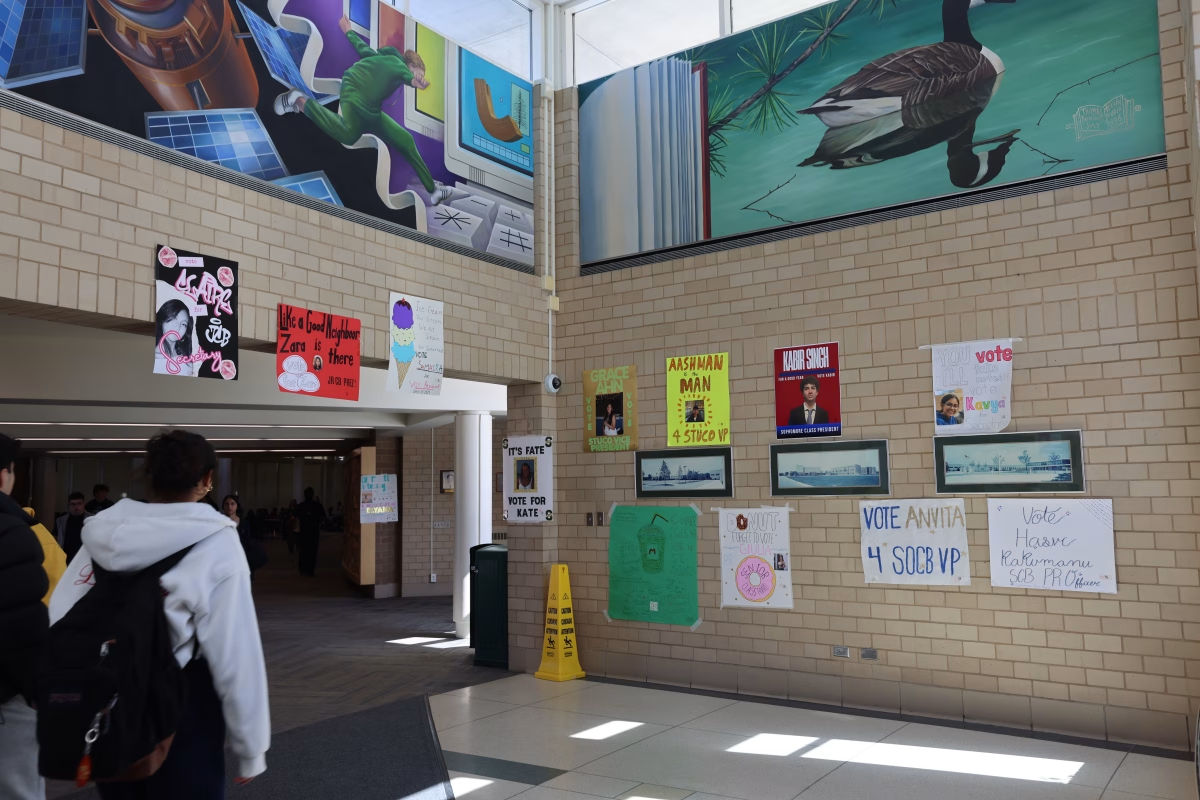
Posters were hung in hallways across the school, usually displaying a photo of the candidate alongside the position they were running for and a slogan. Each candidate could hang up to five posters maximum up until March 19 to avoid incurring an infraction. StuCo President Stu Brodkin ’26 says the addition of more rules and regulations for the campaigning process has helped streamline the election.
“In recent years, it’s gotten a bit stricter,” Brodkin said. “Things like turning parent and student signature packets in late add up as strikes. You also can’t post past voting day on your social media or it would count as an infraction. We really try to encompass the ideas of integrity and accountability in our candidates while preparing them for the next steps if they do get elected.”
Along with campaigning restrictions, there were also requirements affecting the eligibility of students to run for an officer position. According to Aggarwal, requirements for applying to officer positions are to ensure that students are properly prepared to hold leadership positions.
“To be eligible to run for Class Board, you have to have 50 percent or more attendance at meetings, and you have to attend both the Homecoming decorations and the PatriotPalooza decorations,” Aggarwal said. “If it’s your second or third time running, then you have to attend all the student government meetings and be an active member.”
In addition to Class Board eligibility requirements, StuCo has also implemented changes to officer eligibility, with general members no longer allowed to run for elected officer positions—including treasurer, secretary, and the two vice presidents—without at least one semester of experience on the executive board, which is a general leadership position. However, they are able to apply for the appointed positions of Public Relations and Historian to fulfill the prerequisite.
Another part of the campaigning process is speeches, where candidates for StuCo are required to state their case as to why they should be elected and what their goals would be if elected. Speeches were held during the activity period on March 17 in the West Auditorium, and only StuCo general members who wished to attend could listen to candidates in order to better inform their votes.
Brodkin values the speech process as an opportunity to better understand the goals of the candidates. However, he is concerned because he notices attendance at speeches have dropped since hallway passes were introduced starting this school year and accessibility to speeches have been restricted.
“I think the speeches are imperative to really see leadership capability, how the candidates can present what really matters to them, and what they can bring to our school,” Brodkin said. “The speeches are incredibly significant, especially because student council members and the executive board count for 10 times the vote as any other student in the voting process.”
This voting advantage also applies to Class Board members. Once the speeches and voting concluded, votes were counted and the decisions were announced, first to the candidates and then to the general student body. Class Board and StuCo candidates received a phone call announcing their result on the evening of March 19 and 20.
An induction ceremony will be held April 9 where elected students will be given a certificate and the current StuCo President will give a speech to the attendees. Brodkin said that efforts will also be made by current executive board members in StuCo to guide officers into their new roles.
“This year, the officer team and I have firmly decided that we are going to help for a graceful transition of power, especially considering that we’re going to be having multiple juniors,” Brodkin said. “We’re happy to help decide how they want their leadership to look for next year and address the concerns candidates voiced in their speeches.”
According to Brodkin, issues that candidates have promised to address include broadening the reach of Class Board and StuCo and increasing student turnout at PatriotPalooza and similar school-wide events. Vishnu Ilapakurthi ’27 appreciates the opportunity for students to implement positive change in the Stevenson community.
“The importance of Class Board and Student Council is making sure the Stevenson students have an eventful high school career, since we are in charge of things from lunch time events all the way to Homecoming and PatriotPalooza,” Ilapakurthi said. “We have high importance because of our necessity in every student’s high school experience.”