

Ramadan:
Ramadan, a month-long period started Feb 17th, it is where Muslims fast everyday from sunrise to sunset. Ramadan is considered a holy month in the religion of Islam, with the holiday focusing on fasting and self-reflection. The practice of fasting was established as a mandatory pillar of Islam to foster spiritual growth and connection.
Many places promote this pillar, specifically at Stevenson, the Muslim Student Association (MSA) brings together students through meetings and activities, aiming to create a safe space for students to share their experiences. Aya Taria ’27 has been a part of MSA since freshman year and started fasting at the age of 11.
“MSA has truly allowed me to be a part of a greater Muslim community at my school,” Taria said. “Ramadan is a time about community, so having that community at school has made fasting easier.”
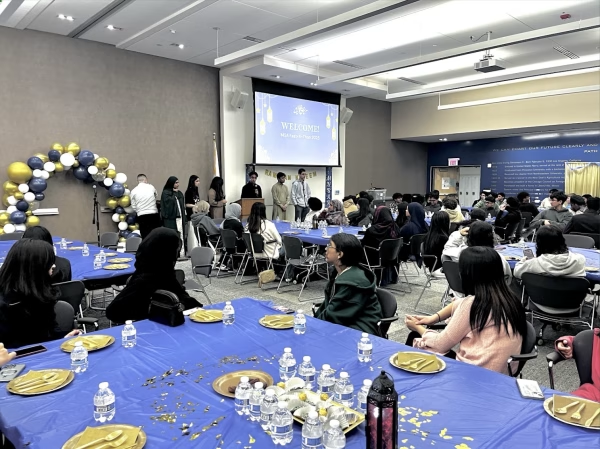
In addition to the weekly meetings, MSA organizes events during Ramadan with the purpose of providing support to a wider school community. One of their most attended events is Fast-a-Thon, where students gather after school, some break their fast together, while others attend to have fun and learn more about the holiday.
“It’s a great way to include everybody,” Taria said. “Who would say no to dinner and guest speakers while learning about the meaning of Ramadan?”
Students like Taria say that besides school activities, many also dive into the more personal and spiritual meaning of Ramadan through fasting and religious practices. MSA member Sakeena Rizvi ’27 describes the month as an opportunity to get closer to God.
“Fasting helps me focus less on the materialistic things and more on praying and self improvement,” Rizvi said “It improves my connection with family and helps me understand the significance of having a community around you.”
Rizvi mentions the personal struggles she experienced while adjusting to the change during Ramadan. She explains that while the spiritual and personal significance of fasting is very important to people, many students face challenges due to fasting, especially during long classes and gym periods.
“It’s definitely difficult,” Rizvi said. “Dealing with not eating and being at school and also having a job and stuff is not easy.”
Amidst these challenges, Rizvi notes that determination and discipline help many who take part in fasting to push through. Despite the adjustment, Rizvi says the month is difficult, but definitely worth it, noting that respect from classmates and friends can make a difference.
“Just be aware of your friends that are fasting and be mindful,” Rizvi said. “Because they’re trying their hardest.”
Lent:
Lent began on Feb. 18, a 40-day ceremonial Christian season of prayer, fasting, and generosity, running from Ash Wednesday to the night of Holy Thursday, just before the Saturday of Easter. The season dates back to the early centuries of Christianity as a period of preparation for Easter.
The season of Lent is a time to give up distractions that may pull one away from a relationship with God, such as social media, sweets, or technology. This sacred season is also an act of solidarity with Christ.
“I’m giving up energy drinks, swearing, and sugar since those are harmful for my body,” Korzeniweska said, “Lent changes me because it teaches me self-control, which is not easy,”
Commitment similar to Korzeniweskas does not happen in isolation. According to Pew Research, about 59 percent of teens say they often talk about religion and practice it with their family. Pew Research emphasizes that the majority of religious practice for teens happens in a family context.
“A lot of the time, my mom and I [do similar practices], so we support each other,” Korzeniweska said. “I remind myself that I’m doing it because of God and Jesus; it makes you not want to quit.”
St. Mary’s Catholic School, a Stevenson feeder school provides access to religious practices for grades Pre-K to 8th grade by reinforcing structured faith practices during the school day. The school encourages students to engage with the season in ways that extend beyond personal sacrifice.
“We’re supposed to fast, give alms and pray,” Assistant Principal Laura Georgen said. “We have access to many different kinds of resources.”
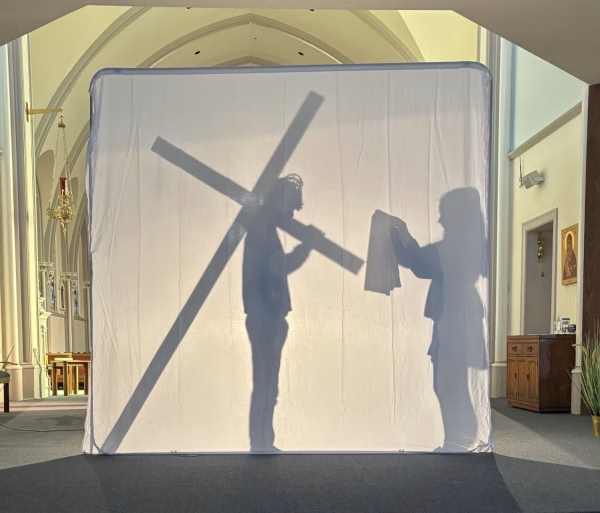
With access to daily religion classes, mass, reconciliation, and the Stations of the Cross prayer, students are able to confess and worship their sins to priests as well as worship together. Students are provided with time to reflect within the school community. St. Mary’s Catholic School aims to create a shared community, reaching a goal of connection and reflection.
“Lent makes me more disciplined and grateful for everything I have,” Korzeniwska said.
Passover:
Passover begins at sundown on April 1 and ends on April 8 or 9, depending on the region of celebration. The holiday lasts eight days (seven in Israel) and commemorates the liberation of the Israelites from slavery in Egypt under Moses.
A central observance of Passover is the Seder, a ceremonial meal held on the first night, or the first two nights, of the holiday. It involves a structured 15-step order of rituals to retell the story of the Exodus from Egypt.
“I celebrate Passover’s first night by attending synagogue and by having a Seder with my family,” Gabe Graupe ’27 said. “The Passover Seder contains an array of symbolic foods which are eaten with family after reading from the Haggadah, a prayer book telling the story of Passover.”
The Seder involves six particular foods that retell the Exodus story, for example, bitter herbs signify slavery, egg for rebirth, and saltwater for tears. Club Israel sponsor Brandi Argentar notes that Seder not only brings her closer to her culture, but also to her community.
“I believe the Seder is the most meaningful part of Passover for families,” Argentar said. “It’s so nice to be able to look up and down the table and be surrounded by family and friends.”
While the Seder traditionally follows a structured order, individual observances of Passover can differ from one household to the next. Argentar describes how she grew up preparing for the holiday and the specific traditions she follows.
“The beauty of Judaism is that everyone has their own traditions,” Argentar said. “I grew up changing my kitchen over each Passover, we are not allowed to use any dishes that we normally would use throughout the year. We also have to use special Passover silverware, clean out the entire refrigerator and freezer, and purchase only Kosher-for-Passover food.”
Throughout Passover, there are also strict restrictions on foods that cannot be consumed. Grain products are strictly forbidden since they become leavened, representing the haste with which the Israelites fled Egypt without waiting for bread to rise.
“Over the course of Passover we do not eat any leavened foods, particularly bread, but rice and oats are often excluded,” Graupe said.
With Passover being celebrated in different ways, Argentar elaborates on the strict guidelines that her family follows. These guidelines include a more detailed planning of meals and use of utensils.
“Since I follow tradition very strictly, I’m not able to purchase any food at school,” Argentar said. “I have to pack my breakfast and lunch, along with any plates or silverware. I specifically remember a time when the World’s Fair was scheduled during Passover which was difficult for me and for all the participants in Club Israel.”
Club Israel activities and guest speakers focused on Jewish culture and traditions. The club also celebrates Jewish holidays, including Passover, through organized events and discussions.
“Every year, Club Israel hosts a Chocolate Seder. It’s a fun way for everyone to sit down together and enjoy delicious chocolate,” Argentar said.
In addition to organizing celebrations within the school, Argentar emphasizes the broader importance of sharing traditions beyond the Jewish community. She suggests how sharing experiences can build a deeper understanding and respect for different cultures and traditions.
“It’s so important for the community to learn about all of our differences and similarities, ” Argentar said. “I know of families that invite non-Jewish people to their Passover Seders to experience something new. It would be really cool if there were a community Seder that invites all members of the community.”
Argentar believes that Passover has allowed her to stay connected to her roots and view life through a unique perspective. She says she’s excited to see how such celebrations occur in the future and hopes to see broader participation in such holidays.
“Passover is a time to gather, reflect on the journey of our people, and look ahead with hope toward the future we are still shaping,” Argentar said.