

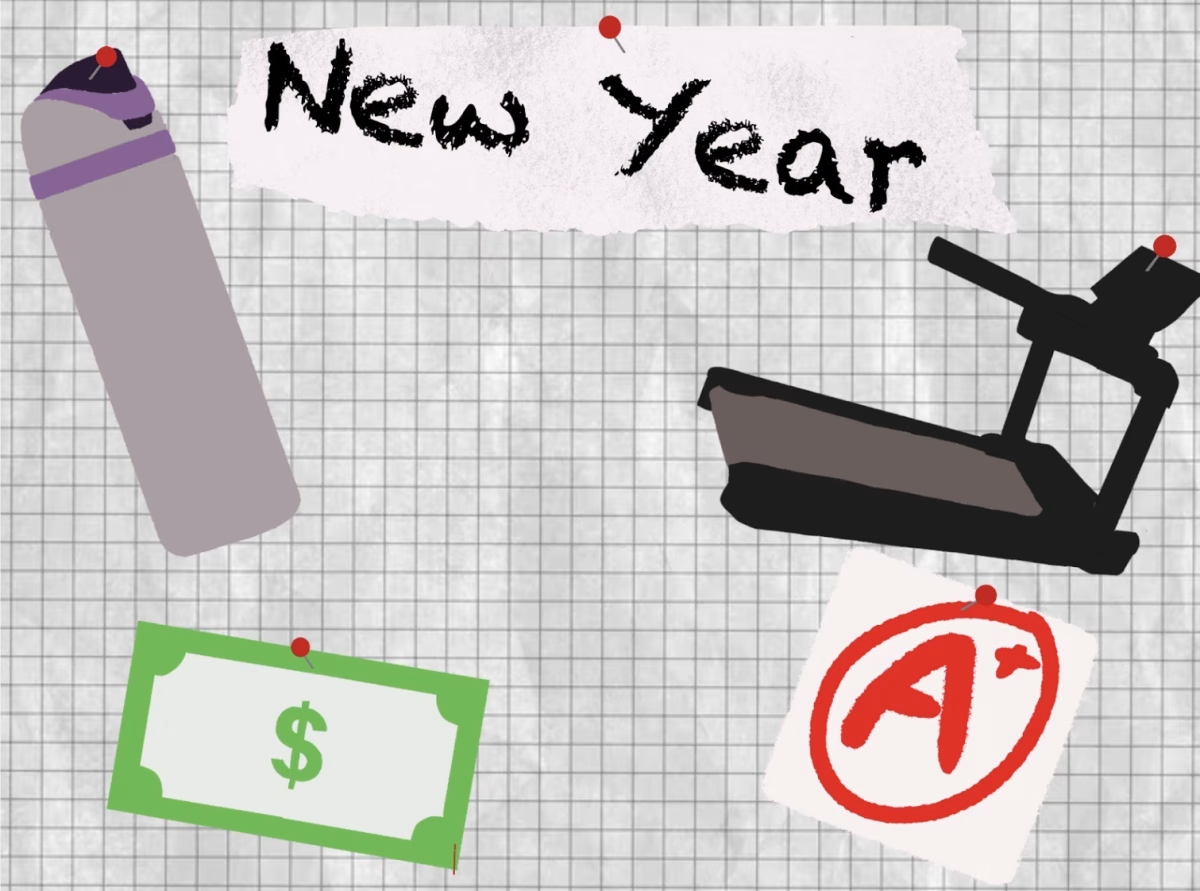
Every January marks a moment for reflection and renewed promises of change. Ambitious life overhauls flood social media feeds, our vision boards, and even conversations with others, all utilized as proof that transformation is about to occur. A New Year’s resolution serves as a clean slate, a socially accepted reset that encourages people to believe in meaningful change simply because the calendar has changed. The bigger question, however, is whether these resolutions are truly effective in the long term.
Resolution-setting varies widely depending on age, environment, and social influence. For high school students, whose goals are often shaped by comparison and external expectations, resolutions can quickly shift from tools for growth to sources of pressure.
Resolutions made by young adults are many times unauthentic and greatly influenced by other individuals in society. This is especially evident in academically competitive environments such as Stevenson, where success is often publicly measured through grades, leadership roles, and visible productivity. In these environments, resolutions can become less about personal growth and more about keeping pace with peers. Students have a sudden need to take on five more extracurricular activities, sign up for six AP classes, and commit themselves to a year of unrealistic standards of perfection.
According to the Pew Research Center, three in ten Americans made at least one resolution for 2024. Younger adults ages 18 to 29 were the most likely to set resolutions, at around 49 percent, while only 18 percent of adults ages 65 and older made the same commitment. This stark contrast speaks to how younger individuals are more susceptible to social pressures and comparison culture, prioritizing new changes as a means of validation rather than self-reflection. Older adults, shaped by experience, recognize the inefficiency of rigid annual resolutions or seem to simply prioritize stability over drastic changes.
The popularity of the “New Year, New Me” mindset further contributes to the failure of these resolutions by framing change as something effortless. The arrival of January 1st creates the illusion that personal transformation can occur overnight, as if habits or one’s identity can be rewritten simply because the year has changed. Social media reinforces this belief by glorifying immediate “glow-ups” and dramatic turnarounds, leaving little room for the reality that meaningful growth takes time. As a result, many resolutions are created without true intention, leading to individuals feeling discouraged from slow progress and later abandoning their goals.
Individuals who set genuine resolutions break them in a manner of weeks, ultimately proving to be unsuccessful in their goals. According to a Forbes Health survey from 2023, almost 48 percent of respondents prioritized fitness, followed by improved finances (38 percent), and improved mental health (36 percent), revealing how health-related goals tend to dominate resolution setting.
Surprisingly, while mental health was the top priority in previous years, the focus has shifted towards physical wellness, suggesting the dangerous reality that resolutions have shifted to be more centered around our physical portrayals than our own mental happiness.
While the survey revealed that 80 percent of respondents expressed confidence in their ability to reach their goal, only 20 percent reported holding themselves accountable. This disconnect highlights how resolutions often function more as statements of intention than commitments to sustained action, revealing that confidence without accountability rarely leads to lasting change.
This disconnect between motivation and accountability is visible in the real word. A clear example appears in the fitness industry, where gym memberships showcase the fading of enthusiasm throughout the year.
According to Mirrors Delivered, gyms experience a 25 to 30 percent rise in memberships in the month of January, driven by New Year’s resolutions. However, a slight drop occurs in February and the following months. People may feel satisfaction of “starting fresh,” but the lack of preparation and motivation means these resolutions rarely produce meaningful results.
To add another level of depth, resolutions can be so difficult to meet because of how humans react to change. Drastic changes can truly make individuals question whether the resolution is even worth putting effort into.
According to Dr. Thomas MacCarty, an associate dean of social sciences at Southern New Hampshire University, many people make resolutions with the best intentions, however, soon realize the commitment, effort, and accountability such goals require. He also suggests that making the wrong resolutions can soon be abandoned in a matter of months. Clearly, the societal norm of setting resolutions doesn’t work for all, and requires guidance to set achievable resolutions to begin with.
New Year’s resolutions have turned goal-setting into a more performative act rather than a productive one. I believe there needs to be a whole new approach to understanding resolutions and how we can meet success.
Psychologist Dr. Rachel Gilk suggests replacing resolutions, like “lose x pounds,” with a single meaningful theme for the year, such as “balance” or “joy,” which reflects the values one wants to cultivate. This approach encourages internal transformation and guides daily choices, making change more sustainable than rigid, behavior focused resolutions, where individuals simply want to jump from point “a” to “b” without any effort.
Yes, resolutions have been around for a long time. But we truly need to change the perspective as to how we set resolutions independently and individually. Without letting social pressures affect our goals, and by broadening our values to better understand ourselves through a ‘New Year of…[theme].’