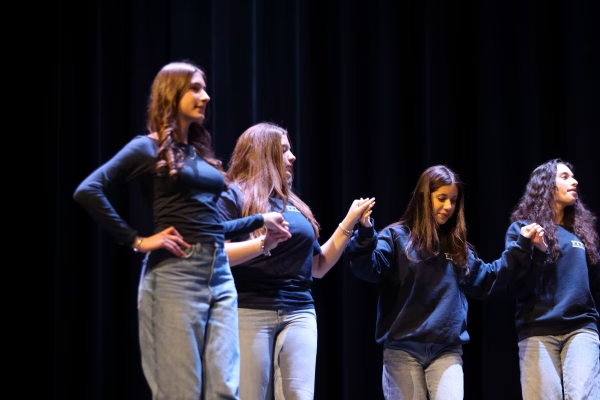

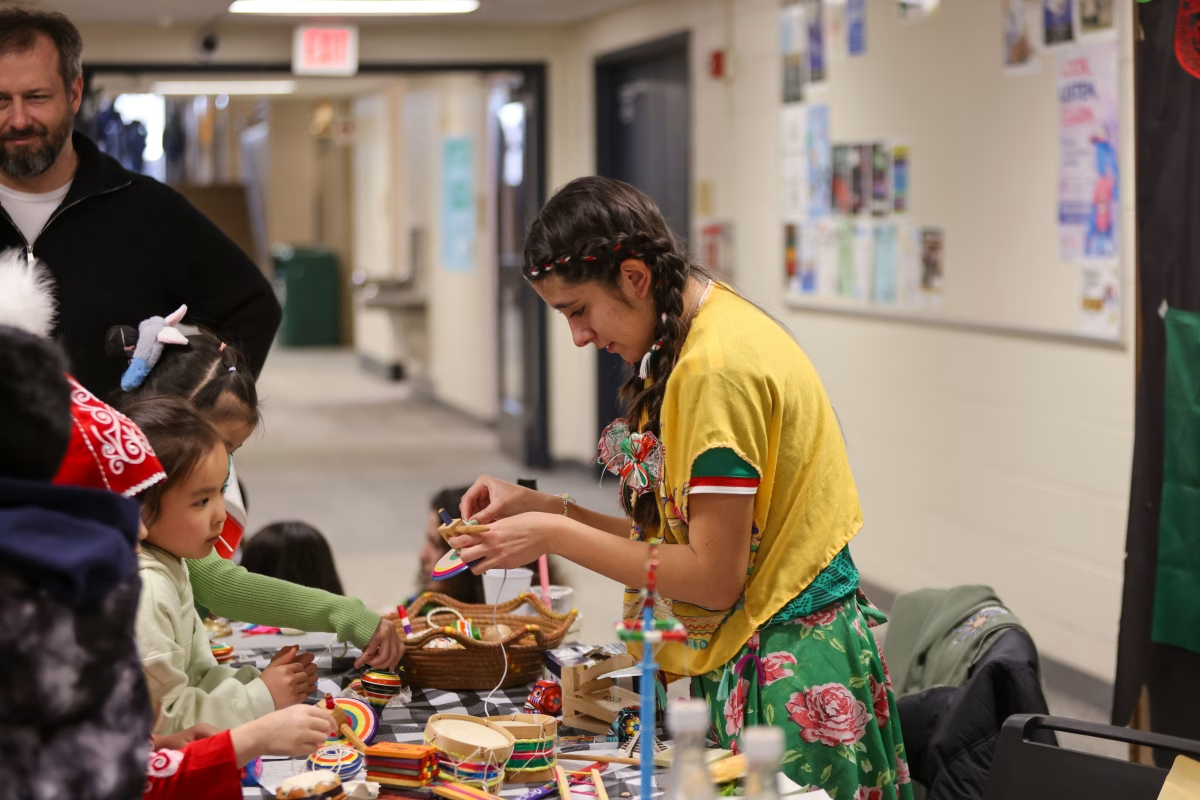
On Jan. 24 and 25, Stevenson’s Diversity Council hosted the school’s annual World’s Fair, where students represented their countries by creating booths to showcase their culture through food and decor. Additionally, students were able to create various performances, taking place each day at 3 p.m. in the Performing Arts Center.
Each booth present at World’s Fair was managed and run by student volunteers, called booth leaders, with the help of other classmates and cultural club members. Together, they managed to create 34 booths representing countries all around the world.
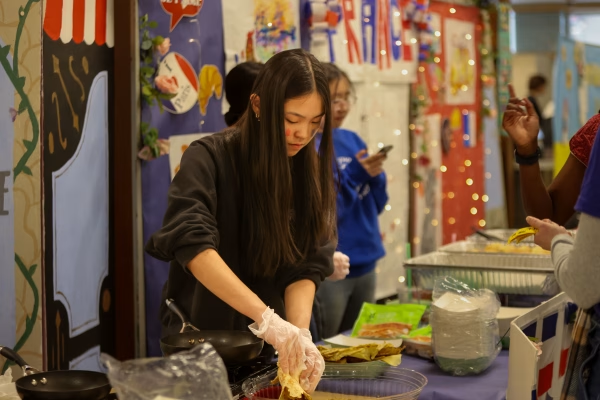
At every booth, there were trays filled with cultural foods and snacks that could be purchased using food tickets. In past years, students prepared their booths with the plan to set up the evening before the big event. However, due to the cold weather on Jan. 23, booth set up was moved to the morning of World’s Fair at 8:30 a.m.
“Usually, for cultural fairs, we plan to bake our food, and practice our dance after school the day before, since we usually have school the day before,” Filipino Club co-president Abigail Torres ’26 said. “But because of the weather we got to spend the whole day working on World’s Fair. So, it actually worked in our favor. And for preparing the booths, it was pretty easy, because we had previous setups, and we just used that.”
The extra time for booth leaders to set up booths, like Torres said, was a definite positive to the cold day, and one that was used by many clubs, not just the Filipino American Student Association (FASA). With this year’s World’s Fair being her fourth and last, she recognizes its significance
“World’s Fair is where I can bring the Philippines here, and where all these Filipino Americans can connect for a day or two,” Torres said.
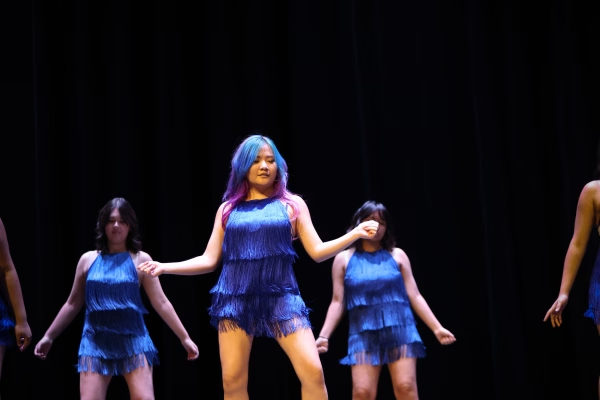
The weekend provides the opportunity for a plethora of students and families to explore various cultures and traditions. Chester Batbayar ’26, member of Stevenson’s Mongolian American Student Organization (MASO) appreciates the experience World’s Fair gives to students like himself.
“World’s Fair is where we get to express our values, our culture, and even our perspective on our culture,” Batbayar said. “We get to see all these other different kinds of foods that relate to each other in some way. To me it’s really important that people can see that we value our culture and we love it.
Having 34 booths available all at once provides anyone with a glimpse of what each culture can entail. David Eddy, director of Stevenson’s student activities and community programs, also mentions how it has impacted the school.
“Our student body consistently shifts in its cultural backgrounds, and being an incredibly diverse school, students often express to us that they don’t get to share this hidden side to them,” Eddy said. “The side they have when they’re with their family which is rooted and steeped in culture and tradition.”
According to Eddy, giving students the chance to express this often hidden side of their culture is invaluable. Associate Superintendent Wendy Custable also agrees that World’s Fair provides a place for students to actually find a new part of themselves within the school community.
“Students may see classmates at World’s Fair, and now, they have more things to talk about in class,” Custable said “They have more connections. That’s the hope.”
World’s Fair provides students a chance to bond over culture, bringing a diverse community close, Custable said. Forming these connections and learning about each other is something that Batbayar hopes will continue to happen year after year.
“I think it’s important to go around, see the different booths, different cultures, try new things, and try to keep the tradition going on with all the people,” Batbayar said. “It’s important to keep this going, especially for the younger generation. I see a lot of middle schoolers that are Mongolian. I want them to come here next year and I want them to be a part of MASO.”
Though bringing up views and beliefs from all over the globe is invaluable to students both who participate at World’s fair and who visit, there is a moral dilemma of what views should be displayed, especially if they would conflict with others.
According to Eddy, an incident involving border conflicts happening in the Israel-Hamas War was brought up in last year’s event. Maps displaying Palestine with these disputed borders were displayed and were regarded as offensive. Because of that incident the purpose of the World’s Fair has been reiterated. Booth leaders were reminded of the goals, and Custable said that over the years the meaning behind the event had been overlooked and clarification was needed.
“We re-communicated the point of World’s Fair,” Custable said. “We realized that it was time to ask, ‘what is the purpose of World’s Fair? Why are we bringing everyone together?’ It’s about celebrating cultures, embracing everyone’s cultures, for students to see and experience other cultures.”
According to Eddy, the point of World’s Fair is not only to give students to understand the differences between themselves but also to provide students a sense of community with shared backgrounds, heritage, and cultural values.
“All students get to see how culturally diverse our school is, they get to see that there are people who have these same cultural experiences during the holidays,” Eddy said. “It’s not so isolating then, going into a big place like Stevenson, because you know a bit of what to expect. I would imagine that’s how new and existing students feel.”