

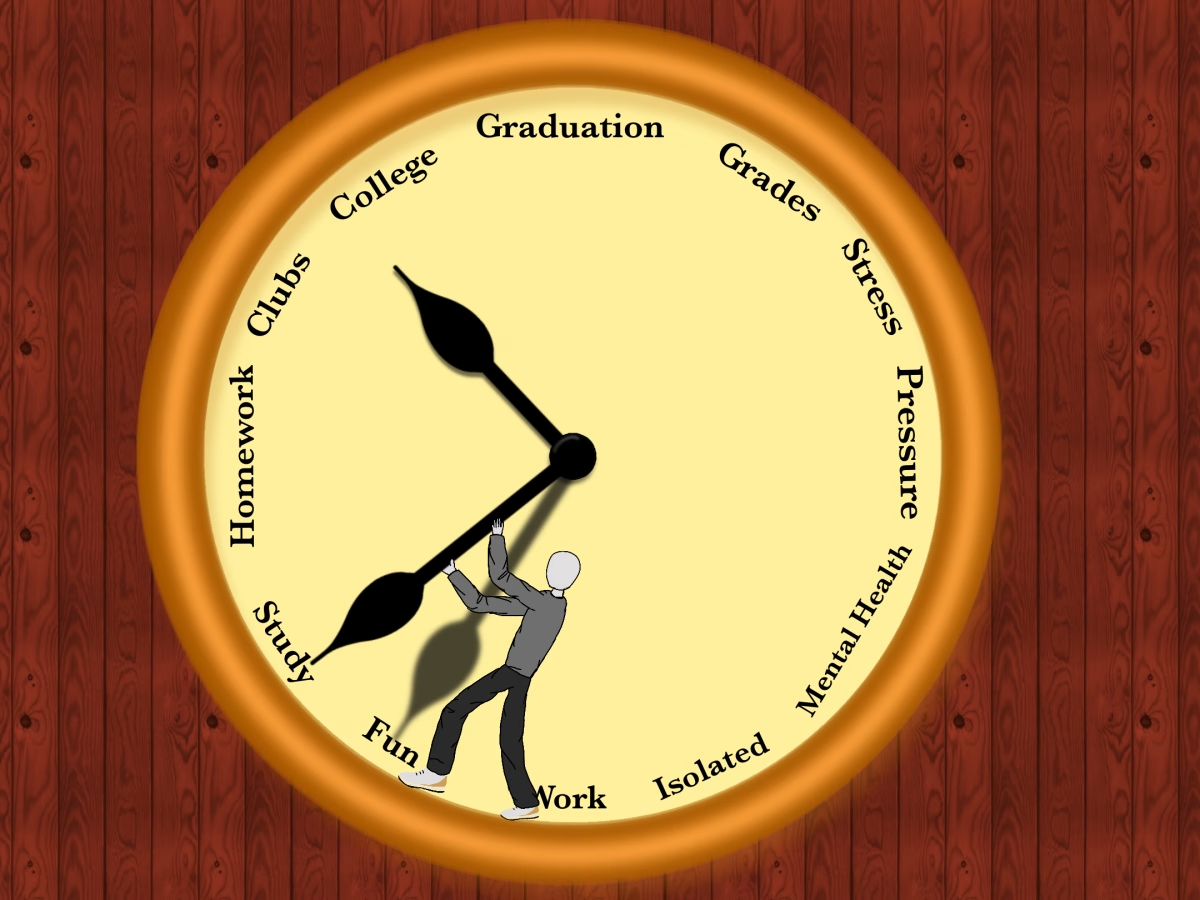
Across the hallways of Stevenson, a few words are most prominent: “college,” “clubs,” “grades,” and with them, conversations about the next event, next hangout, and the present are increasingly drowned out by anxiety over the future. The four years of high school seem not as years to relish, as was the case with previous generations, but rather as a time to “lock in” for college and future careers. The pressure from parents, friends, and social media presents a dilemma to ever more stressed high school students: Is it worth sacrificing the high school experience of youth and exploration to better set oneself up for the future?
Anxiety over the future, termed “anticipatory anxiety” by experts from the American Psychological Association (APA), plays a significant role in the mental well-being and health of young adults. The APA further found that this anxiety can spike when people are in a time of transition, where what is familiar is increasingly under threat. High school, especially during junior and senior year, is particularly stress-inducing as it represents a pivotal moment in their lives, a time of transition into both adulthood and independence; there is fear in the unknown of what these new experiences may bring. Statesman attributes this heightened sense of anxiety to academic pressure and social media that shape this generation’s high school experience, with most students spending the least amount of time with friends in decades.
A survey conducted by Monitoring the Future found that the reduction in time spent with friends is most apparent in the past 15 years, with 44 percent of high school seniors reporting spending “almost every day” with friends in 2010 compared to only 32 percent in 2022. This drop of 12 percent is likely attributed to the COVID-19 pandemic, which created a culture of interaction over FaceTime and other digital mediums rather than face-to-face interaction, which remains important for adolescents.
In light of this data, former Surgeon General Vivek Murthy even declared a “loneliness epidemic” with a lack of personal time with friends causing future mental health issues. In past generations, a large portion of recreational time was spent outside: parks, local basketball courts, or playing sports. While these activities still take place, they occur on a much smaller scale, with an increasing number of teens spending free time huddled over their phones and in isolation. The time that was once spent building relationships with friends and family is now spent mindlessly scrolling through social media and viewing impersonal content, with lives centered around technology rather than people.
The detrimental effects of academic pressure and a rise in technological communication are clear — teens feel increasingly isolated in a time of such dramatic change. A recent study from the National Institutes of Health (NIH) further emphasizes the importance of face-to-face interaction, concluding that decreased time spent with peers has significant effects on mental health, like increased rates of suicide, anxiety, and depression.
Time spent with freinds and general socialization have especially come under threat with the proliferation of short form media through apps like TikTok and Instagram, whose algorithms are driven solely to increase viewer retention. The term “doomscrolling” has become popularized in recent years, referring to the act of spending hours on end on social media, trapped in a frenzy of short-form videos and attention-grabbing content.
Not only does short-form media take up increasing portions of time, but they often also glorify the lives of extremely successful and wealthy people, creating more lifestyle comparisons between viewers and influencers. Statesman fears that constant comparison with others can lead to a less appreciative attitude to the things that students do have, and propogate a toxic culture of always wanting more and never being satisfied
This raises widespread concerns for teens across the nation and especially at Stevenson, where the academically grueling environment leaves little room for any other activities. The little time left over is often taken up by social media and devices rather than spending crucial time with friends and family. As many Stevenson seniors will gladly tell you, the four years of high school really do “fly by,” making it even more important for students to cherish the time they spend in high school, rather than constantly harboring anxiety over the future.
In the past few years, Stevenson has made a few efforts to reduce academic pressure and make time for conversation with family. One such example of this is the annual “Talk About Your Future Night” where teachers are instructed to give out no homework, leaving students with time to talk to their parents about future education and career plans. Even these limited “no homework” days, however, are again geared towards the one thing students are most stressed about — preparing for their future, and do little to alleviate the anticipatory anxiety that many students harbor.
The Statesman recommends that to promote student well-being and enjoyment throughout high school, the administration should work to provide more of these “no homework” nights. However, instead of being about planning one’s future, these nights need to be about enjoying one’s present. In the pressure cooker that is Stevenson, the future is well discussed, but the present is often neglected, thus creating an ardent need for students to take a deep breath and consider an easing of academic workload from time to time. We only have so many memorable teenage years.
It is unreasonable to tell students that they must prioritize fun over achieving long-term goals, but this isn’t a zero-sum game; students must focus on finding a more delicate balance between their well-being and academic success. Statesman recommends that students utilize their free time, however limited, by spending time with friends and family instead of “scrolling away” the time on social media. Further, even deleting some of these apps to prioritize long-lasting relationships through hosting phone-free dinners or study sessions at the library can go a long way in enjoying the present.
To truly alleviate anticipatory anxiety, students must realize for themselves that the fruits of life don’t always lie in the future; they often lie right in front of you — in the present. In the iconic words of the 1986 film Ferris Bueller’s Day Off, “Life moves pretty fast. If you don’t stop and look around once in a while, you might miss it.