


Jeremy Lei’s ’27 Chinese class went on its annual trip to Chinatown, where students toured the busy shops and ordered lunch at authentic Chinese restaurants. On the bus ride back to school, the air was filled with laughter and liveliness, making it clear that the field trip had become a core memory that would stick with them throughout their high school years.
Throughout the school year, clubs and classes at Stevenson offer field trips for students, granting students the ability to visit a variety of places.
As Lei noted, the priorities of these trips include both educating students and serving as a bonding experience to help students form connections. Lei strongly believes that field trips are more engaging compared to everyday lessons in the classroom as students can learn and grow through real-life experiences.
“My favorite part of this field trip was being able to immerse in Chinese culture while being able to engage with my peers,” Lei said. “We got to explore a variety of different shops on our own, which was very exciting.”
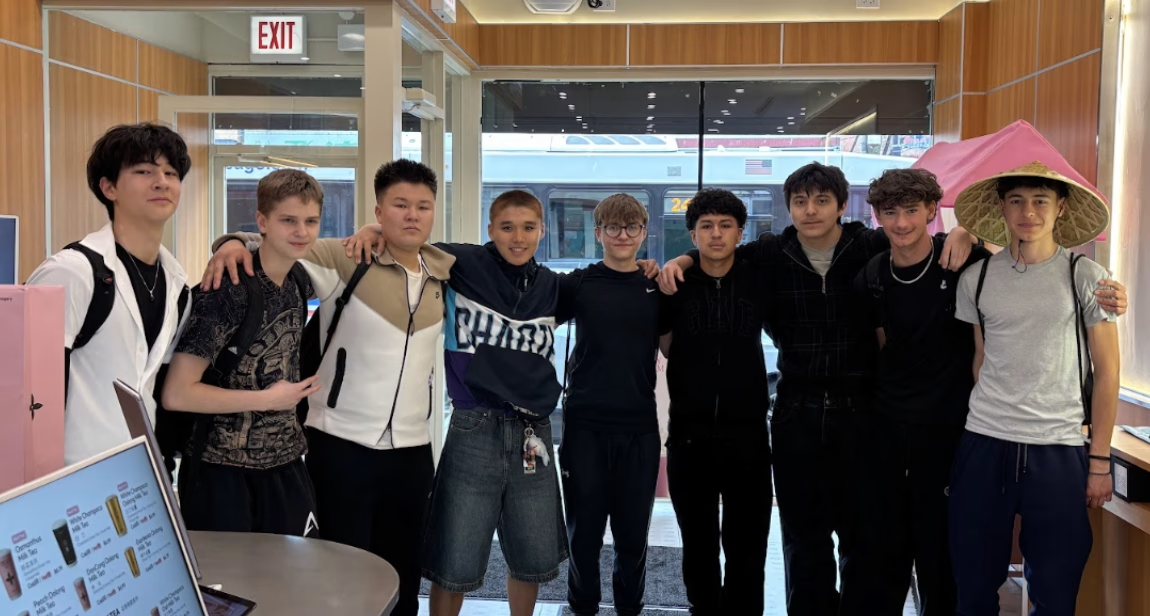
Additionally, Lei notes how the excitement students feel about field trips may derive from the freedom that it gives students, considering how students are able to stroll around the city in an academic setting or studying the daily life of an authentic cultural hotspot.
Introduction to Business teacher Bryan Anderson, who takes his students to Top Golf as an annual field trip, believes that field trips serve multiple purposes: educating students and being an event that gives students a balance between enjoyment and learning.
“In addition to meeting with the management team, we get to stay at Top Golf for lunch and some golfing,” Anderson said. “It is so fun to get to watch students relax and enjoy themselves for a bit.”
Anderson observes that students may learn better on field trips as it allows them to experience new activities that are not usually found in school. Elizabeth Malloy ’26 is a student leader for Operation Snowball, a two-and-a-half day retreat to Camp TimberLee that’s packed with indoor/outdoor activities and small group sessions. Malloy admires the ability of school trips to leave a lasting, life-changing impression on students.
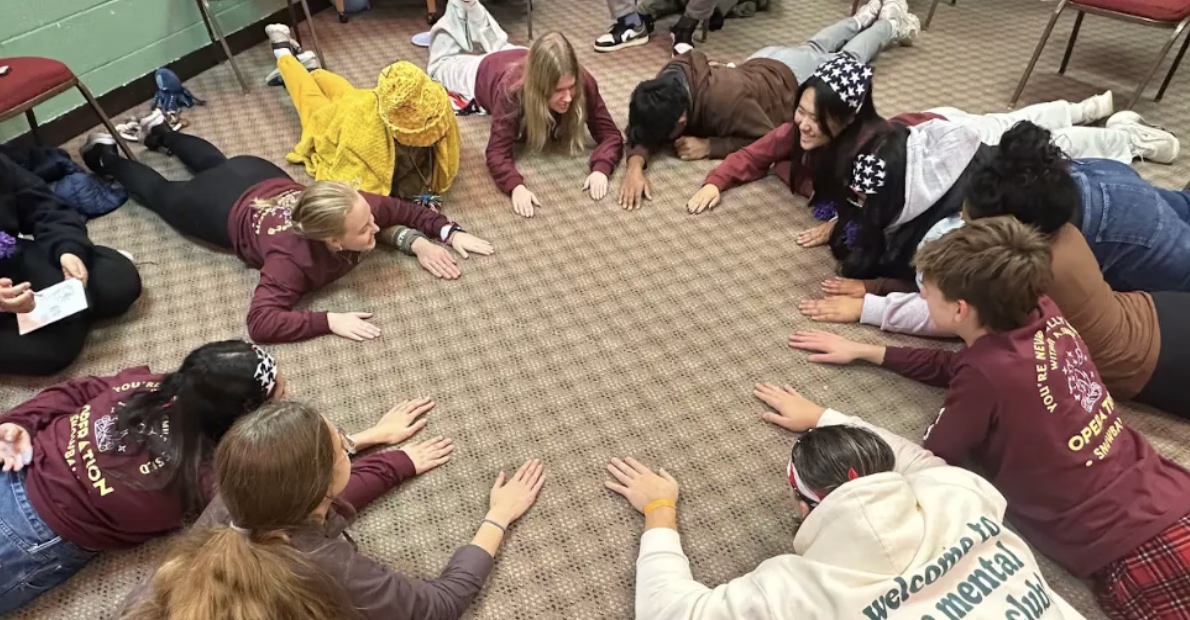
“I think an ideal field trip would be something that’s engaging,” Malloy said. “Engaging, but also something that sticks with you afterwards. The experience may be pretty cool, but if you forget it the next day, there’s no point in going.”
While agreeing with Malloy that participation is crucial, Rachel Wu ’27 views the purpose of field trips as being an experience that leaves an emotional impact on students. In March, Wu went to Cafe Ba-Ba-Reeba with her Spanish class, in which she saw the traditional Flamenco dance, a traditional Spanish art form, and tried tapas, a small Spanish dish that’s usually eaten in a social setting.
“Seeing the dancers’ energy, emotion, and rhythm up close made the culture feel alive, and through this field trip, we were able to connect what we learned in class with real experiences,” Wu said.
Wu acknowledges that class field trips can turn a culture into more than just a language, since the exposure to diverse cuisine, traditions, and history deepens their understanding of different cultures. Lei agrees with Wu on the importance of exposure to different environments and specifies the impact of new experiences on students’ ability to comprehend what they are learning about.
“Interacting with the real-world encourages students to be exposed to both visual and physical experiences with unfamiliar cultures that boost active engagement and understanding,” Lei said.
As students are given the chance to learn on their own, Lei still emphasizes how the responsibility falls on students to take full advantage and embrace the learning experiences that they are offered on field trips. Malloy echoes this sentiment, specifically recognizing the efforts of Snowball’s organizers to push students to form new memories.
“Operation Snowball forces you to get out of your comfort zone and connect with people who are in different grades, have different interests, and have unique opinions and views,” Malloy said.
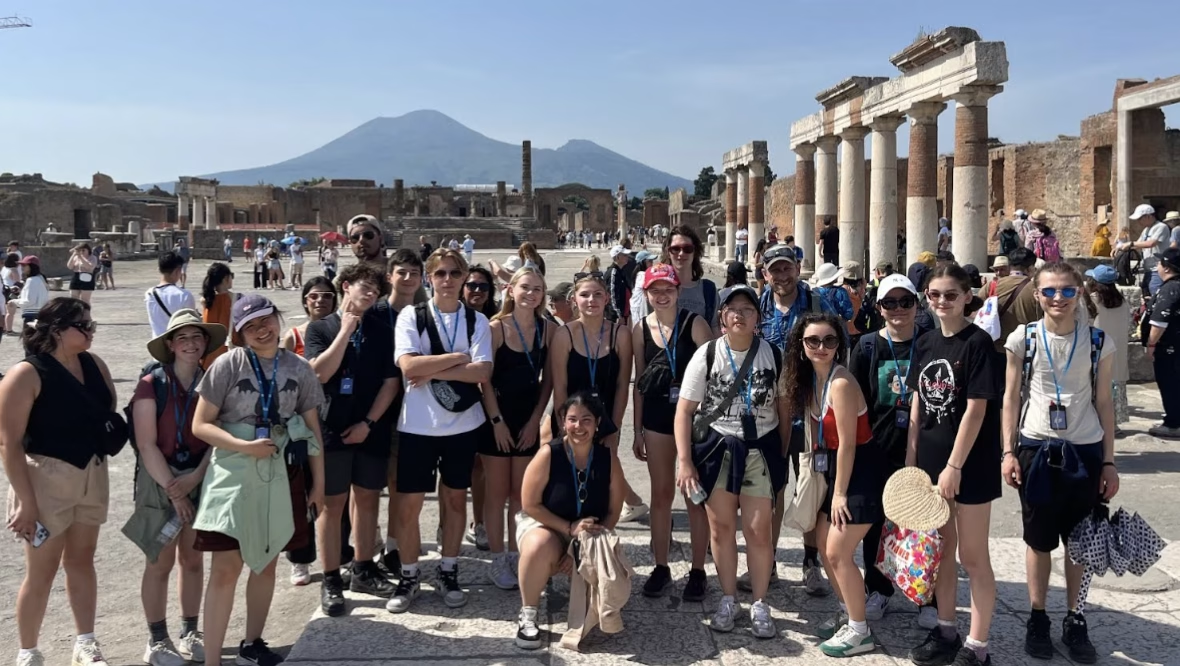
Malloy understands that field trip organizers have a lot to consider and are responsible for planning trips that take place in a variety of locations, but believes that the organizers’ main priority remains the impact these trips will have on the students.
AP European History teacher Keith Hannigan said that much of the planning behind field trips is done for students to learn as much as possible.
“When you’re traveling with a class, a lot of the hassle is done for you, so you don’t have to worry about how you are going to get there,” Hannigan said. “You will also have your teachers there who curate it and guide it to steer you towards the more interesting sights.”
Building off of what Hannigan mentions about teachers wanting to make field trips accessible to many students, Data science teacher Bradley Der also highlights the effort teachers make to plan out field trips for their students so that they have an exciting day. The math classes Data Science, Mathematical Modeling & Design, and Advanced Mathematical Decision-Making were taken to watch a Cubs game, a field trip that the math department had long been preparing for.
“First, we need to get an estimate of how many students would be interested in coming because we need to purchase the tickets before we have students in the course,” Der said. “We’ve been buying tickets months before the actual game and pushing to sell out the block of seats pretty much in the first week of the school year.”
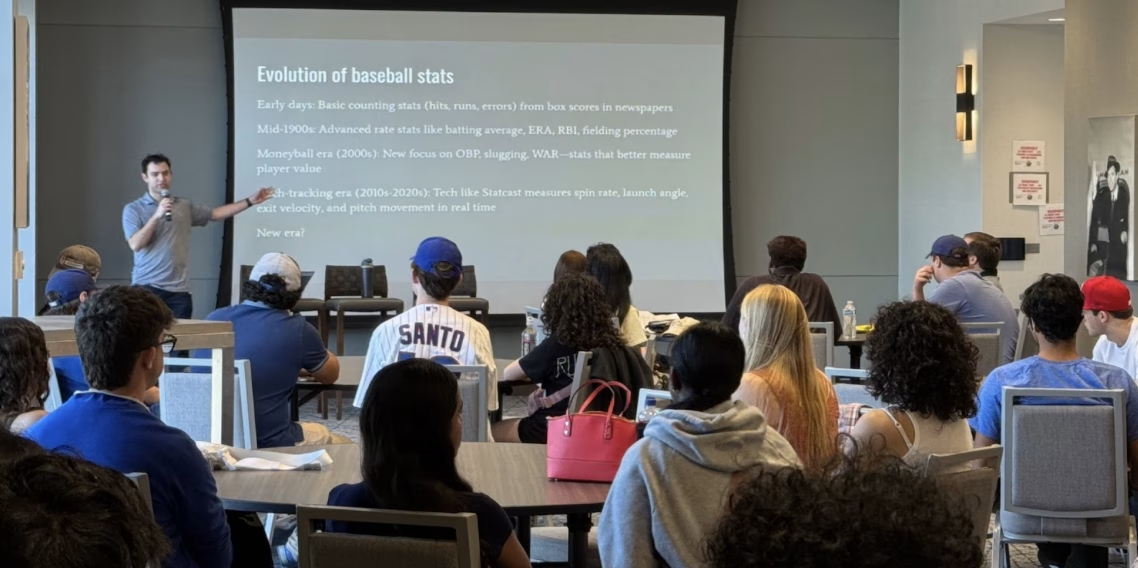
When reflecting on the preparations made ahead of time by the organizers, Der believes it is important that students have a good time on their field trips and are able to learn in a fun environment.
Lei appreciates the effort made by organizers of his field trip and how his trip to Chinatown with his class had very little payment requirements, making the field trip accessible to a broad range of students.
“The field trip did not cost anything unless you wanted to buy from the stores in Chinatown, so it made the experience available to everyone despite their budget,” Lei said. “Since students were not expected to consider the detailed planning of the field trip, the whole class could participate and learn together.”