

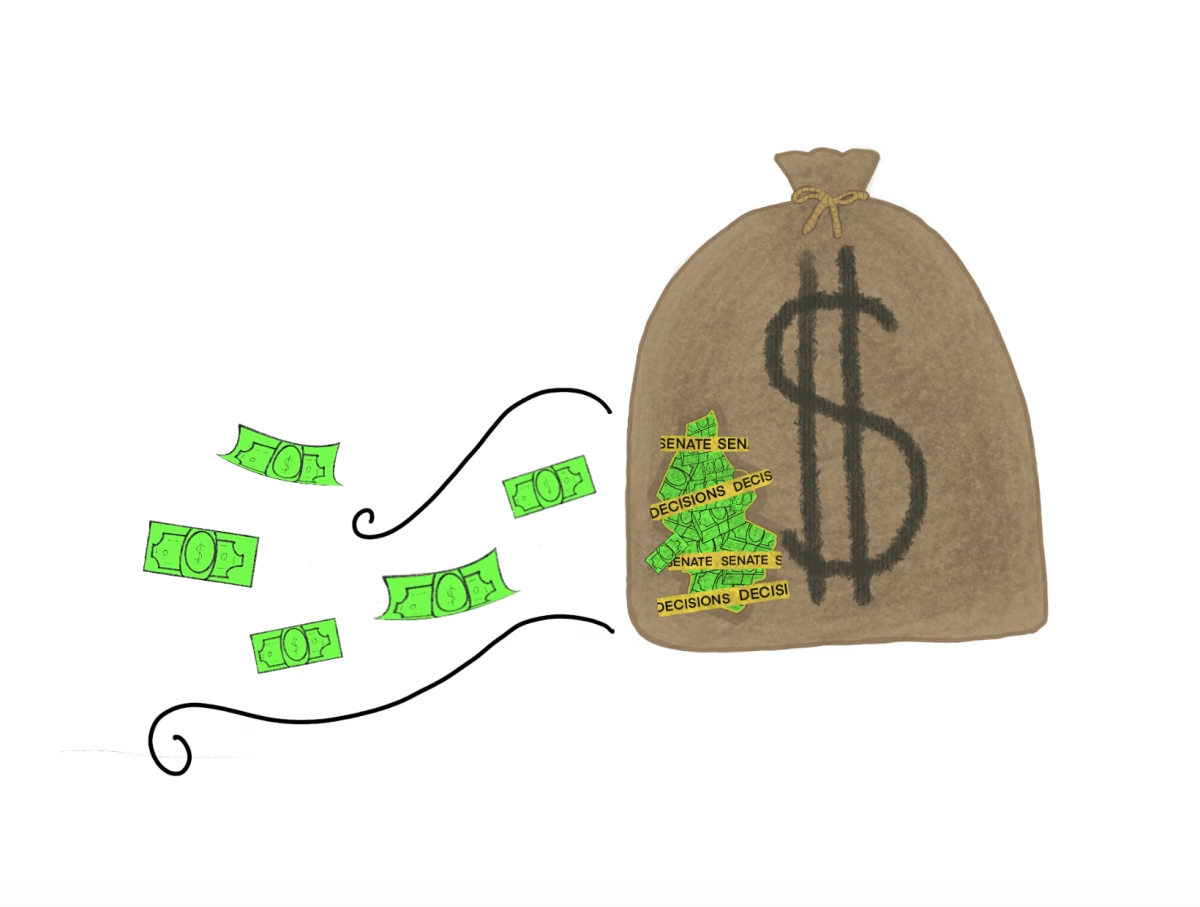
On Nov. 13 the U.S. The House of Representatives voted 222-209 to re-open the United States government after a 43-day shutdown. This decision comes amidst reduced economic activity throughout multiple sectors such as the Department of the Treasury, Federal Reserve, and several food bank nonprofit organizations, following a halt in government funding for public programs.
Reduced economic activity within these sectors have caused a change in the specific effects of the government shutdown, including the defunding of welfare programs and the temporary leave of workers. This change within the United States government and additional sectors has affected hundreds of thousands of Americans.
According to National Public Radio (NPR), 34 percent of the federal workforce were expected to experience unpaid furlough, or a leave without pay as a result of the government shutdown. This group consisted of employees from the Department of Defense, Health and Human services, the executive office of president, and Department of Treasury. However, according to National Economic Director Kevin Hassett, roughly 60,000 government workers were rehired after being temporarily let go during the shutdown.
As a result of the loss of jobs and other factors such as changes within federal welfare programs, Democratic senators called for an immediate reopening of the government. According to Economics teacher Sandra Wright, the immediate reopening was impacted by the impact the shutdown had on families and small businesses.
“Businesses and households plan their production, spending, and consumption decisions based on anticipated contracts that have already been made or income they’re planning on receiving,” Wright said. “So when you have something like a shutdown, it shocks those sectors in the economy. The shutdown causes a massive supply chain disruption and the fact that it’s avoidable is frustrating — it has a negative impact that isn’t necessary.”
Wright references a shock felt both locally and nationwide, which included the halt of numerous programs such as Head Start and the Supplemental Nutrition Assistance Program (SNAP). According to Entrepreneurship Club executive board member Sahana Raja ’26, the defunding of these programs essential to thousands of Americans has resulted in questions about government stability.
“If you think about small businesses, a lot of them rely on subsidies and loans from the government,” Raja said. “With that shutdown, I know that a lot of businesses were starting to worry about whether or not they would be able to continue receiving that funding and support. I think for a lot of people, the reopening was a sigh of relief and gave people a lot of confidence as well in terms of how they’re able to run their businesses.”
Raja’s statements regarding the business sector come amidst controversy about government funding centered around the perceived recent inefficiencies of government functioning mentioned by Wright. Wright explains that the inefficiencies are related to the temporary dismissal of furloughed workers which resulted in a lessened use of resources. She highlights how this use of resources has affected public facilities that had been largely vacated.
“Why would corporations have resources that we’re not using? Not only humans, but also all the equipment we still have to pay for,” Wright said. “The government still has to pay the electric bill, the rent, etc. So there are office buildings that are empty, plants and facilities that are shut down, whether it’s a museum, or a park — stuff that they considered non essential.”
Following the end of the government shutdown, the economic results have been predicted to be partially reversed. According to data from the Congressional Budget Office, the Gross Domestic Product (GDP) is predicted to increase from -1.5 to 2.2 from September 2025 to early 2026.
However, Democratic senators such as Tim Kaine previously displayed concerns that prolonging the shutdown would drag on more unprecedented consequences. According to NPR, in an interview with Kaine, Senate leaders voted for the compromise in order to limit harm while still attempting to maintain their stance on healthcare.
“There was no guarantee that waiting would get us a better result, but there was a guarantee that waiting would impose suffering on more everyday people,” Kaine said.
While Kaine aims to prioritize the balancing of compromise and solution, Wright wants to highlight the real-life impact of those decisions on everyday people. She recalls the hidden impact that is felt throughout the Stevenson community, especially those who face the direct consequences of a lack of government presence. For example, some students rely on Stevenson’s One Family program which provides essentials to families in need. Wright calls to light the need for a shift in mindset regarding political divides that cause unnecessary struggle for many Americans.
“People now see the political process as a zero sum game of if you win, I lose,” Wright said. “We, as a country, need to have more legislation that becomes less conflict ridden, and instead have more willingness to be solution driven. I would hope that students learn one how important it is to be active in the political process, to engage your members of Congress, no matter where you live, and to demand more from them.”