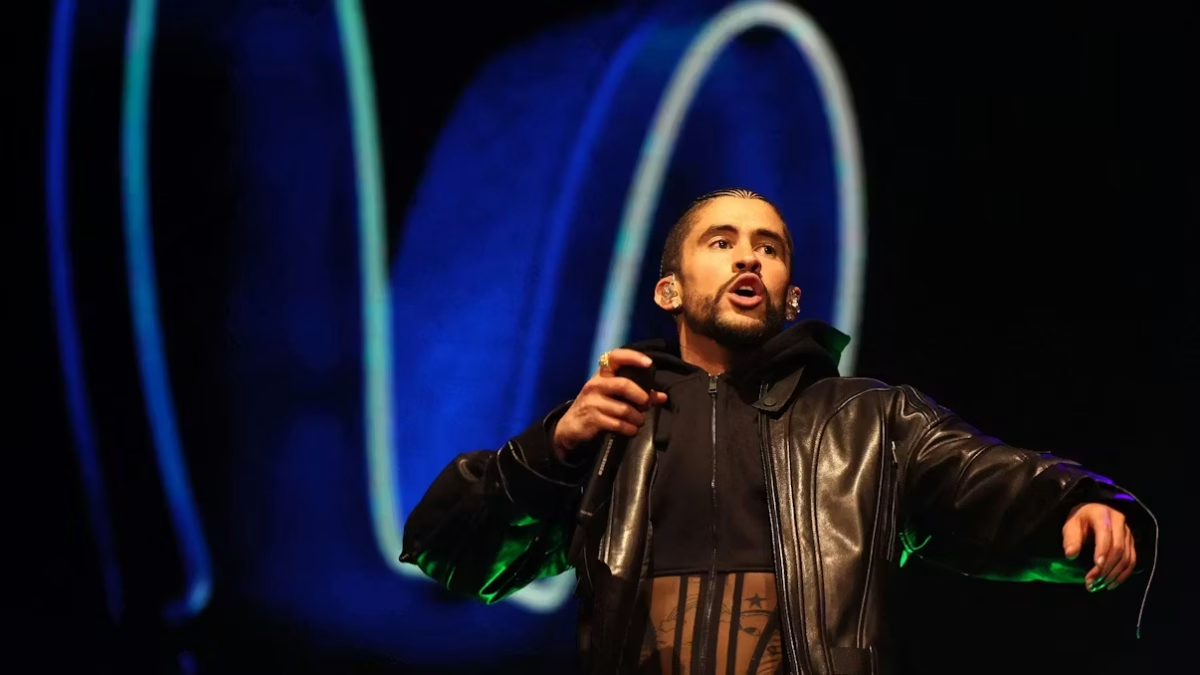
On Feb. 8, 2026, Puerto Rican artist Bad Bunny is scheduled to perform the halftime show for the 60th Super Bowl. The performance will take place at Levi’s Stadium in Santa Clara, California, which has a capacity of 75,000 people.
The Super Bowl, an annual tradition for some American families, has hosted a performer during the show every year since the first game in 1967. Bad Bunny previously performed as a guest in the 54th Super Bowl in 2020 alongside headliners Jennifer Lopez and Shakira, but there was little commentary about his appearance, with CNN reporting the lead acts caused the strongest reactions.
However, following the announcement of Bad Bunny’s performance this year, there has been backlash over its timing due to recent Immigration and Customs Enforcement (ICE) raids and comments made by President Trump.
With 10 Grammy nominations and three wins to his name, Bad Bunny has built a strong global following, and is the third most streamed artist on Spotify in the world, with 79,501 million monthly listeners. Lucia Gutierrez ’27, president of the Latin American Students Organization (LASO), believes Bad Bunny deserves to share his music with the world given his widespread popularity, which can inspire other artists to experiment with different music styles.
“His style of music, reggaeton, is not like rap or Rhythm and Blues (R & B), so it’s bringing a new musical style into the US,” Gutierrez said. “That is inspiring other people to start bringing in traditional music [from their countries to the US] and making it more modern.”
Spanish teacher Samuel Figueroa believes that apart from introducing new genres to American music, Bad Bunny’s work sends a message to the world about the strength of Puerto Ricans and their culture. Puerto Rico has a history marked by colonialism, economic struggle, political rights, and discrimination, before eventually becoming a self-governing commonwealth in 1952, as reported by the U.S. Commission on Civil Rights.
“His music has shone a light to a mass audience in terms of the struggles Puerto Rico, and the people have had, both here on the mainland and on the island,” Figueroa said. “I think anytime anybody has a voice like that and is able to bring people on board, it’s absolutely amazing.”
Bad Bunny, in addition to releasing music, is also a vocal speaker and activist, using his platform to advocate for issues he believes in. His works are often politically charged, raising awareness for social justice around the world. He has advocated for Puerto Rican sovereignty, LGBTQ+ rights, and disaster relief. For example, in 2020, Bad Bunny spoke out in favor of the #Black Lives Matter movement, in an interview for TIME magazine.
“I think Bad Bunny’s activism has definitely enlightened many people on the plight of Puerto Ricans and different aspects of how either the culture is being devalued or it’s being monetized in a touristic sort of way,” Figueroa said.
While some, such as Figueroa feel that Bad Bunny has a positive influence on American culture, not everyone feels the same. An online petition demanding Bad Bunny’s removal from the Super Bowl halftime show has garnered over 100,000 signatures, stating that the show should instead represent “traditional” American culture.
“For those who think a Puerto Rican shouldn’t be performing, they’d best be served with a history lesson,” Figueroa said. “Puerto Rico is a part of the United States. If you’re upset that someone’s waving a Puerto Rican flag, you should be upset that someone’s waving a Texas flag — they’re all American citizens.”
The NFL has defended Bad Bunny, stating that there will not be a change in performer but has also announced a pre-Super Bowl concert headlined by British artist Sting on Oct. 28. The NFL has not clarified on whether this was a direct response to backlash or not. Following the original announcement, President Donald Trump also commented on the upcoming performance.
“I don’t know who he is. I don’t know why they’re doing it — it’s, like, crazy,” Trump said.
In Oct. 2024, Bad Bunny supported Kamala Harris for president and specifically criticized Trump’s actions related to Puerto Rico. The music video for his song “NUVEAYoL,” released in July 2025, specifically criticized anti-immigration policies. The song featured a voice mimicking Trump that said, “this country is nothing without the immigrants.” The president’s political allies have since stated that ICE agents would be “all over” the Super Bowl in Santa Clara, California.
“There is nowhere that you can provide safe haven to people who are in this country illegally, not the Super Bowl, and nowhere else,” Corey Lewandowski, chief adviser to the Secretary of Homeland Security, said in a recent interview.
Aside from his Super Bowl performance, Bad Bunny’s new world tour, Debí Tirar Más Fotos, is scheduled to begin on Dec. 10 in Mexico City, following the release of his newest studio album. However, no U.S. stops were included.
“I know he said he wasn’t doing a tour in the US because he was afraid of ICE raids,” Gutierrez said. “I honestly think that’s very brave of him to speak up on that.”
Gutierrez believes that despite current controversies and amidst stigma against Latino Americans, Bad Bunny’s music continues to reach audiences globally. Extending past language barriers, Gutierrez argues he appeals to listeners that connect with his musical sound and style, not only his words.
“I know people everywhere that listen to music and they don’t understand the words, but they vibe with the music,” Gutierrez said.
Figueroa has also observed the impact of Bad Bunny and similar pop musicians among students, causing him to embed his music in the classroom. He has incorporated a Bad Bunny lesson plan into his Spanish teaching material, creating a point of connection between cultural identity and student discussions.
“It’s incumbent on us teachers to look at pop culture in a way that allows us to connect with our students… so we can be speaking the same language,” Figueroa said.
Figueroa believes that this connection can be attributed to Bad Bunny’s success with many Latino Americans who might be navigating multiple cultural spaces. In a recent interview, Bad Bunny spoke about the importance of Latino representation in American culture, sharing what the Super Bowl performance meant to him.
“It’s more than an achievement for myself, it’s an achievement for all of us,” Bad Bunny said. “It shows our footprint, and our contribution to this country, that no one will ever be able to take away or erase.”