

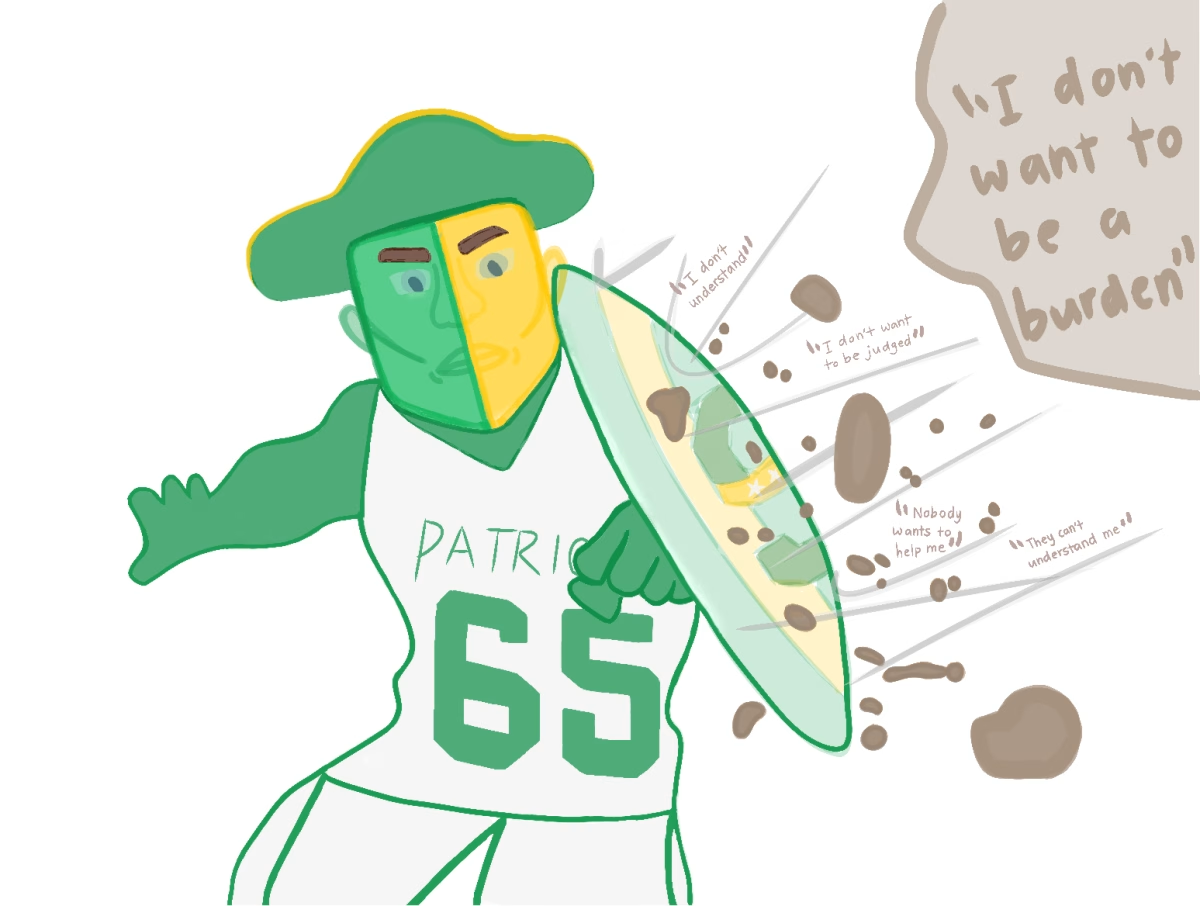
The growth of artificial intelligence (AI) has revealed a curious trend: more and more individuals are outsourcing their grievances to AI chatbots rather than to therapists, friends, or loved ones when they need reassurance and understanding, and they’re finding solace in the attempt. Across schools, colleges, and in our overall student body culture, there’s a pervasive stigma in seeking treatment and help for all kinds of personal issues.
What has gone wrong? Why are we becoming more resistant to confiding in others for help? And how do we reverse our aversion to seeking help?
Asking for assistance in academic studies and mental health struggles may be a personal preference informed by an individual’s experiences with trauma, motivation, lifestyle barriers, and more. However, it’s important to note that environmental factors like Stevenson’s culture or societal norms in particular have created a burden of shame around seeking help.
In a hyper-competitive academic environment like Stevenson, where you’ll routinely find classmates “easily” juggling a handful of AP classes on top of extracurricular commitments, it’s tempting to put on a painted face of invincibility. Students display an image of effortlessness while actually working really hard to stay afloat so as not to appear less competent and less capable. The social expectation to lack struggle and difficulty on the path to academic or personal success exacerbates the hesitation some students may feel toward going to tutors or office hours.
This is the consequence of learning in a setting where flawlessness is a more respected marker of exemplary character than vulnerability and the humility to ask for help. Show struggle, and you risk falling behind in the collective march towards career and academic success.
Other times, social barriers to seeking assistance are more blatant. Despite increased mental health awareness, judgment towards those who experience mental health challenges is often harsh, as those experiencing mental health disorders may be characterized as weak, lazy, and unstable. According to the 2022 Annual Performance Report from the US Equal Employment Opportunity Commission, in the past decade there has been a nearly 20 percent increase in Equal Employment Opportunity Commission claims (claims that report job discrimination) on the basis of discrimination towards mental health conditions or mental disabilities. This pattern demonstrates the perception that those with psychiatric conditions are unemployable and financial liabilities.
In recent years, there has been an increase in policies and initiatives reforming mental health treatment implemented on college campuses following the COVID-19 pandemic, such as “Let’s Talk” consultations that offer free and confidential meetings with college counselors. However, accommodations for those who need them are still being ignored. Colleges are penalizing students for mental health conditions through threats of expulsion instead of providing assistance, even when these students have the ability to continue their studies. Students are discouraged from writing about mental health in college application essays because it portrays them as fragile and makes them a potential liability when on campus. When those struggling with mental health are treated as threats and with assumptions of incompetence by institutions that are obligated to prohibit discrimination for these groups, it creates the expectation that those who need assistance should hide their true mental states to avoid repercussions and marginalization.
Additionally, there is an implicit contempt or disbelief in some individuals towards the idea that those who have privilege and status can be struggling. This is especially true with the sentiment among older generations that younger individuals are spoiled, lazy, and have it easier, and thus do not know true suffering, according to Jessica Kitt from University of Central Florida. We may insensitively suggest that mental health struggles are only acceptable in certain contexts, such as situations of extreme injustice. In reality, mental health struggles can be found in all individuals in all situations.
To break the sense of shame in asking for help, our institutions require a shift in how we view those who are struggling. Role models play a role in this reform: public figures, like Michael Phelps and Simone Biles, model the way we should treat mental health by destigmatizing mental health struggles in even those who seem most successful. They also work to empower speaking out and seeking help as a strength rather than an inability to push through or handle hard things. Their prioritization of getting help through therapy should give us pause and reflect on our damaging competitive culture, where we too often forgo help to demonstrate that we can get through everything by ourselves. We need the reminder that progress is enabled by the guidance of others, and is rarely a solitary pursuit.
We also cannot overlook the routine acts in our daily lives that contribute to a culture of suppression and fake well-being. On the opposite end of the spectrum, an environment hyper-focused on achievement and being “locked-in” often glorifies feelings of stress, burnout, and pushing oneself past their limits as if they should be overworked to depression. This is commonly termed “hustle culture.” Students often joke about their caffeine intake and sleep deprivation, creating a sense of normalcy towards these otherwise extreme, unhealthy habits.
Worse, many students performatively claim to be struggling in order to blend in with the crowd. These behaviors compound to make students minimize the severity of their personal and academic struggles and feel a sense of failure and embarrassment for not being able to deal with the valid challenges of burnout and stress, driving them away from help. We have to be upfront about what we are sacrificing to stay afloat and stop condoning stressful actions as a healthy way to live our lives.
Along with shifts in our culture, paying attention to the language we use is especially impactful in reducing the burden of asking for help. When referencing others, avoid using language that blames people for their mental health conditions because doing so reinforces shame surrounding things outside their control. Additionally, outdated but still pervasive slang terms like “loony” and “freak” are negative, derogatory, and disrespectful associations of others, which only further ridicule rather than comfort the afflicted and discourage others from getting help for fear of being misunderstood and judged.
In a study by the Institute of Psychiatry at King’s College London exploring the opinions of people towards those with mental illness through language, the use of harmful slang terms was discovered to be partly due to lapses in knowledge about mental health and mental illness. Instead of using prejudiced language, we should strive to understand and sympathize with those who ask for help to eliminate our own ignorance and presumptions. Our duty is to enter every interaction with other people with an open mind.
The efforts we make in our own lives can combat the deep-seated, intrinsic assumptions of weakness that make asking for help so embarrassing. But, at the end of the day, if schools have gaps in student support and perpetuate narratives of shame, the stigma of asking for help will not go away. We must hold not only ourselves but our institutions accountable for ignoring students in crisis and not being proactive enough towards steering those afraid of getting help to resources and support.
At Stevenson’s Nov. 14 2024 district board meeting, student support services outlined the procedure of conducting regular screenings of students for various needs. Throughout all four years of high school and even the year before entering Stevenson, students remain in contact with their Student Support Team through check-ins like the freshman Pulse survey, Signs of Suicide survey in freshman and junior year, and curriculum meetings with their counselor and post-secondary counselor. There are also various ways to seek peer counseling through the Peer Helpers club and Student Support Groups. Stevenson, as a whole, is well-equipped to handle students who need help. Additionally, with Illinois governor JB Pritzker’s signing of SB 1560 in July 2025, mandating regular mental health screenings across all schools in Illinois, addressing the lack of seeking health across youth that has become increasingly prevalent for all students. At a local level, our institutions are becoming more committed to increasing the mental health help resources available to students.
If we continue to hold schools up to these standards and commit to creating a welcoming culture for help-seeking, we can start building an environment where more individuals feel comfortable asking for help. By requesting more frequent welfare check-ins, training mental health providers to be more responsive and empathetic, etc., the stigma of seeking help can begin to be combated.